FlyMAD: dialling courtship arousal up and down
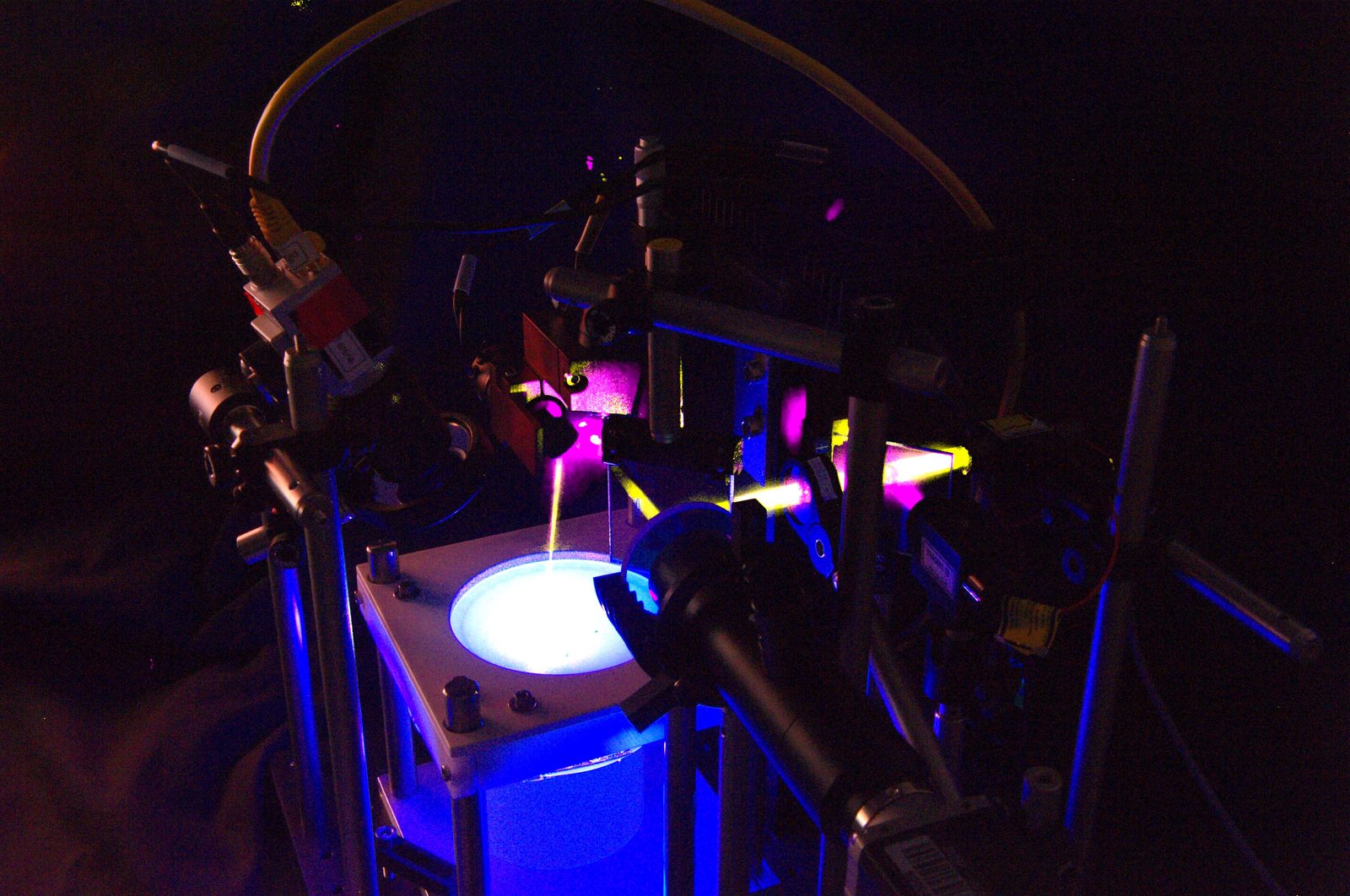
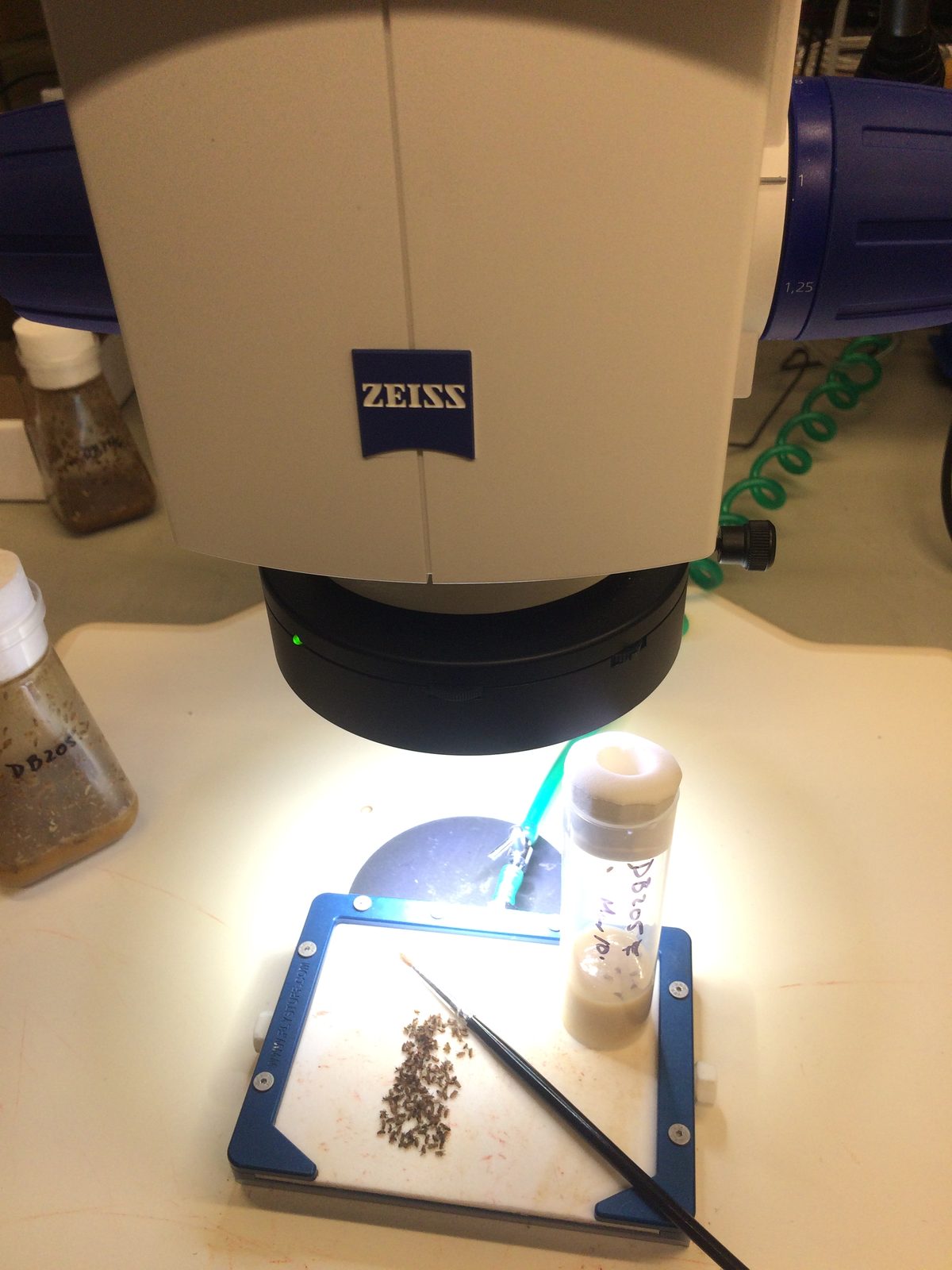
A live-tracking system that aims a laser at a freely walking fruit fly so specific neurons can be switched on and off mid-behaviour. I then used it to study how courtship arousal is controlled.
- Where
- Institute of Molecular Pathology (Vienna) & HHMI Janelia Research Campus
- When
- 2011 – 2016
- Role
- PhD researcher & Visiting Scientist (with Barry Dickson); first author
- Tools
- Real-time tracking, steerable lasers, opto- & thermogenetics, computer vision
The question
When I started, behaviour research was in its technical infancy: behaviour was scored by hand, and nobody could switch specific neurons on and off with precise timing in an animal that was free to move. Without that, you can’t ask what a neuron does at the moment a behaviour happens.
The build
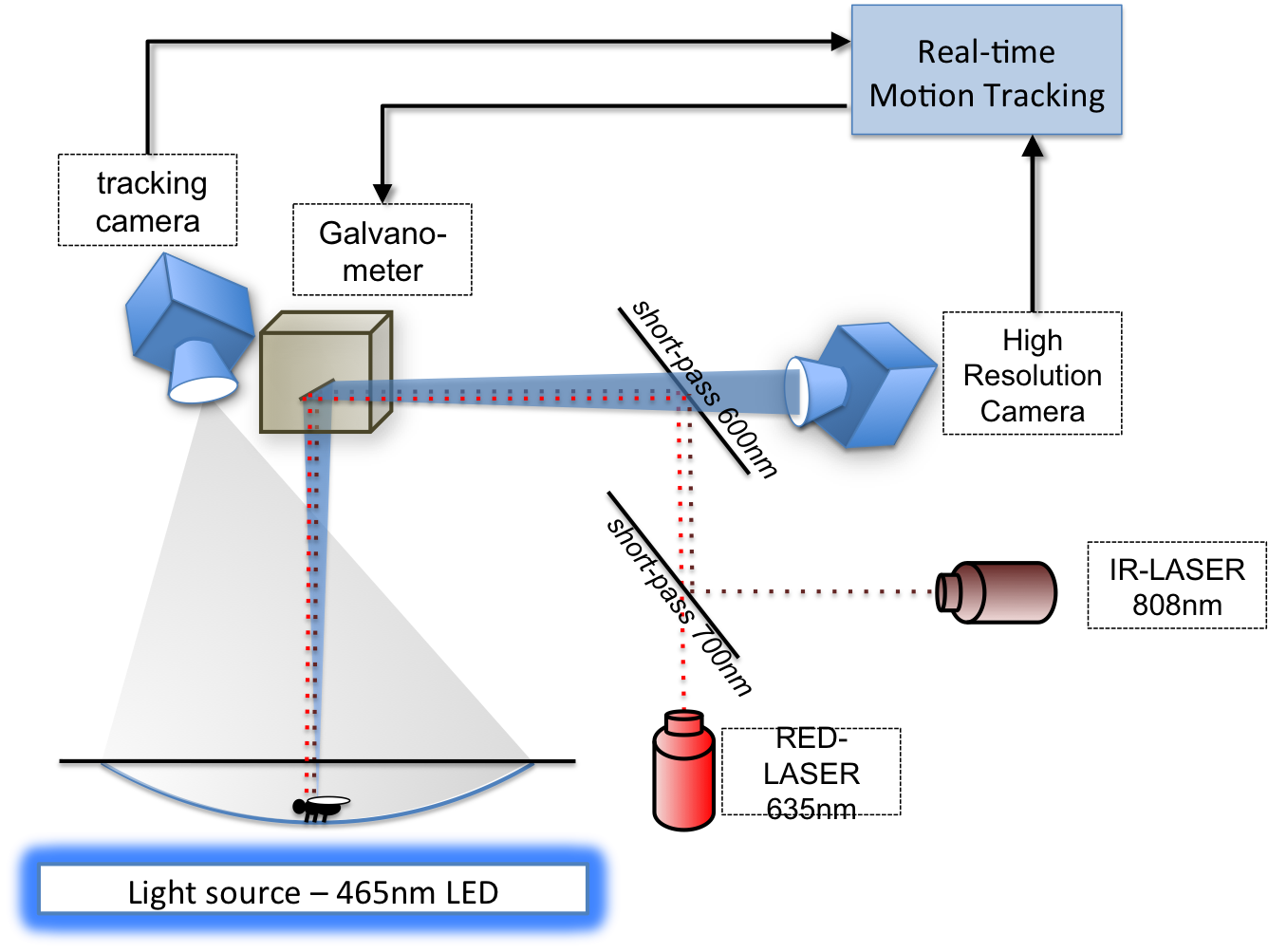
- Worked with software engineers to build real-time tracking that steers an optical beam path onto a moving fly
- Used the same beam path for high-resolution imaging of the fly and for laser light that activates neurons with opto- and thermogenetic tools
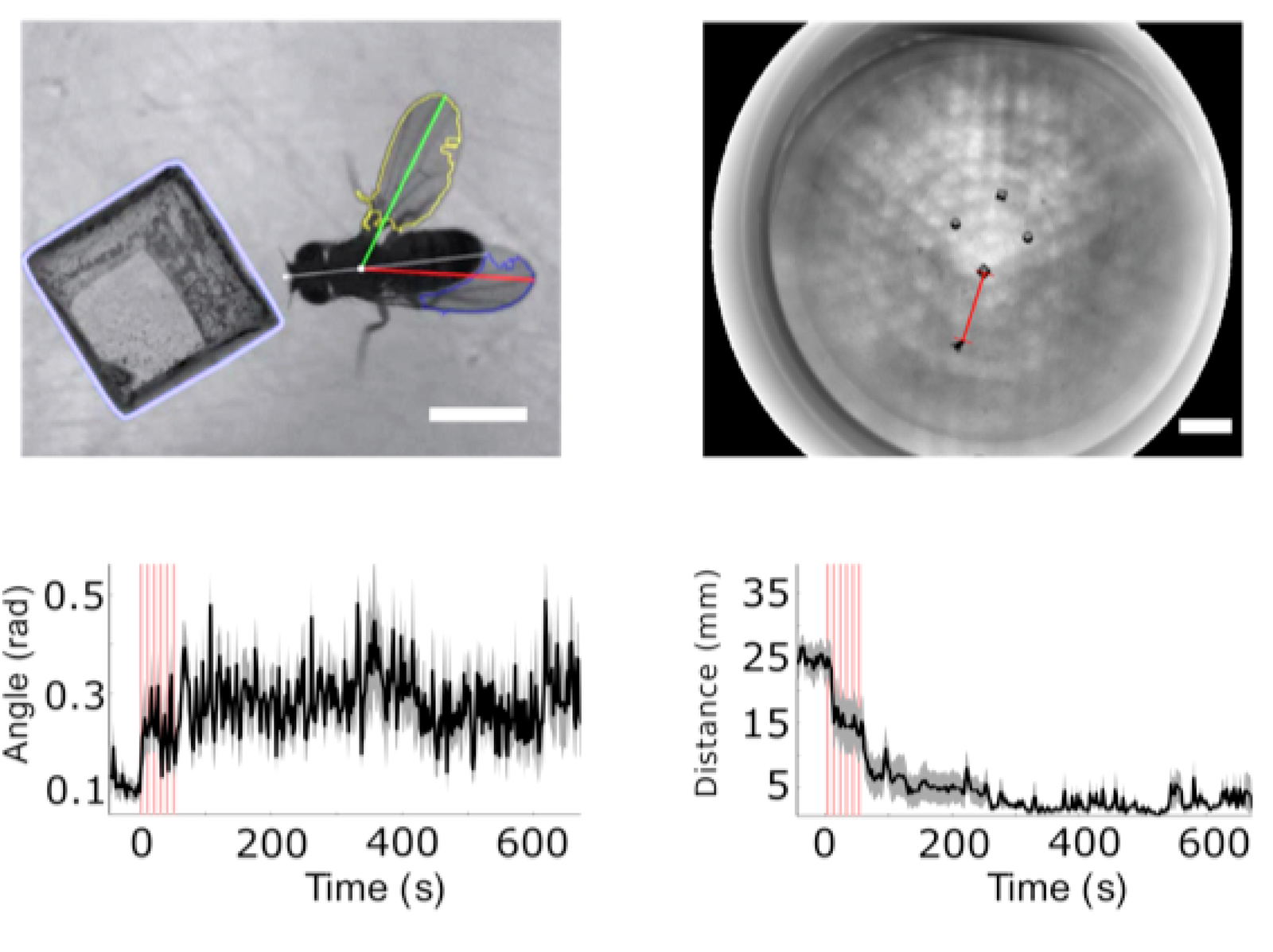
- Measured the resulting behaviour automatically with computer vision instead of scoring it by hand
- Made neuronal manipulation fast enough to switch a behaviour on and off within the same experiment
The discovery
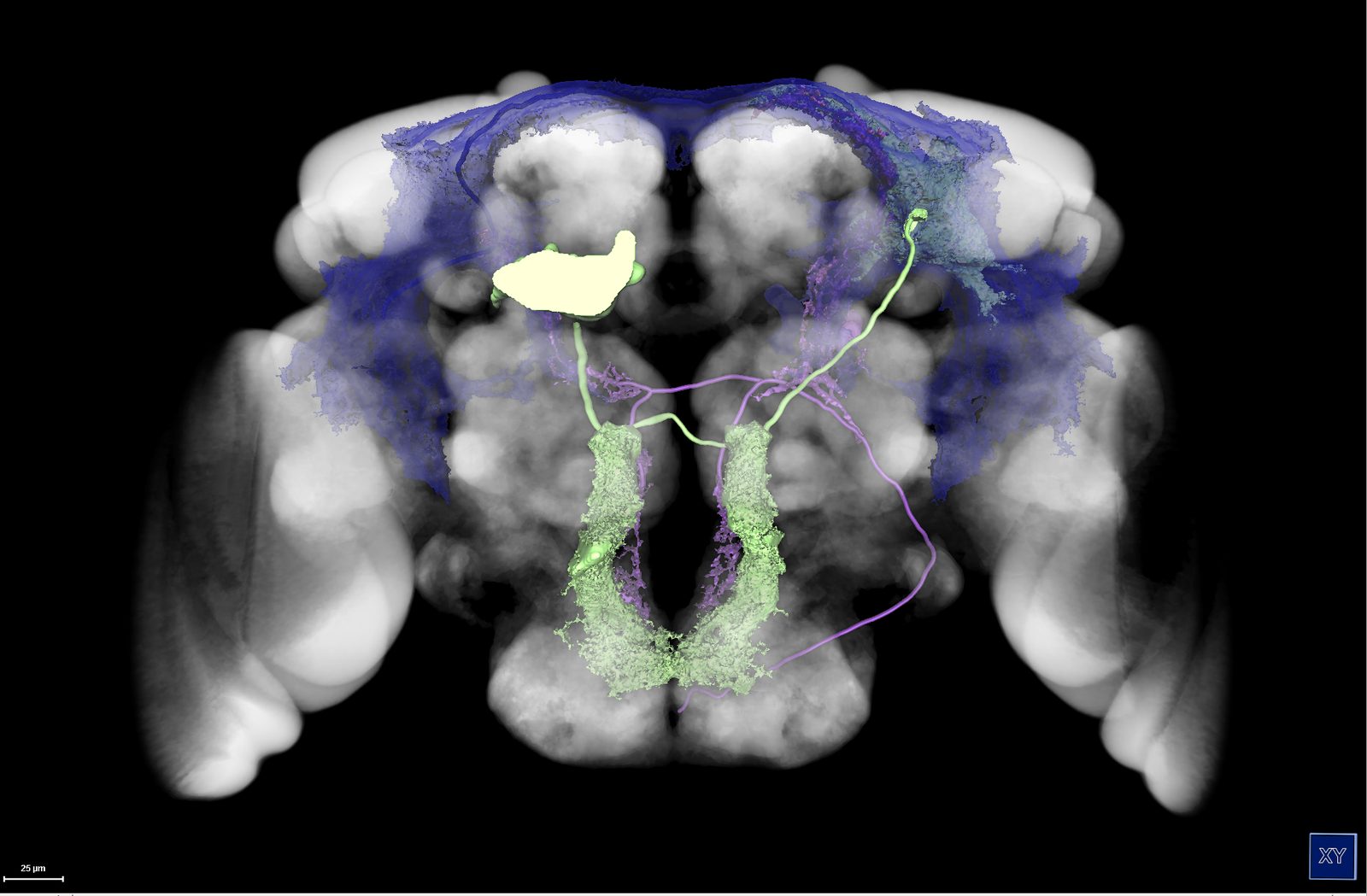
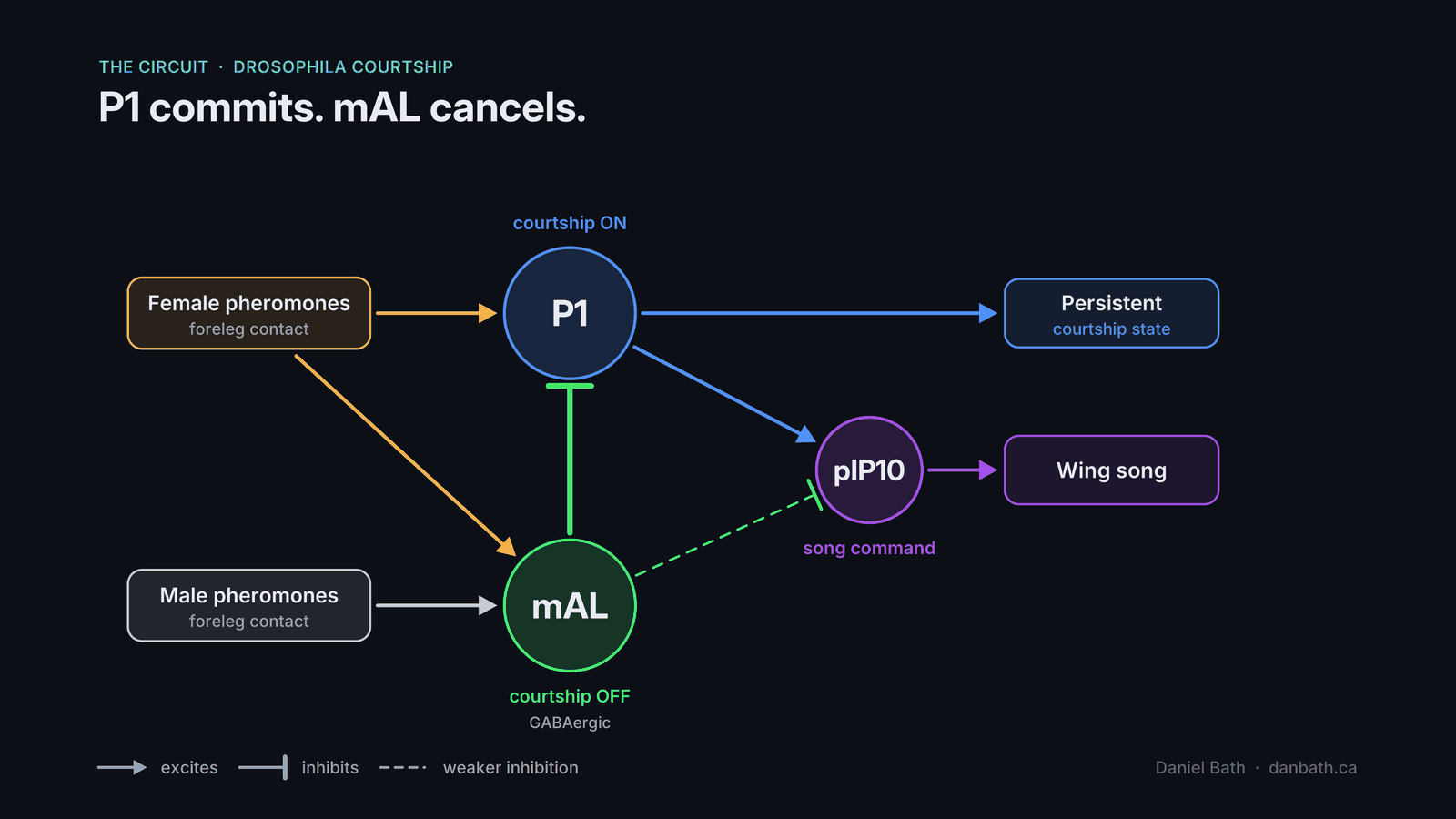
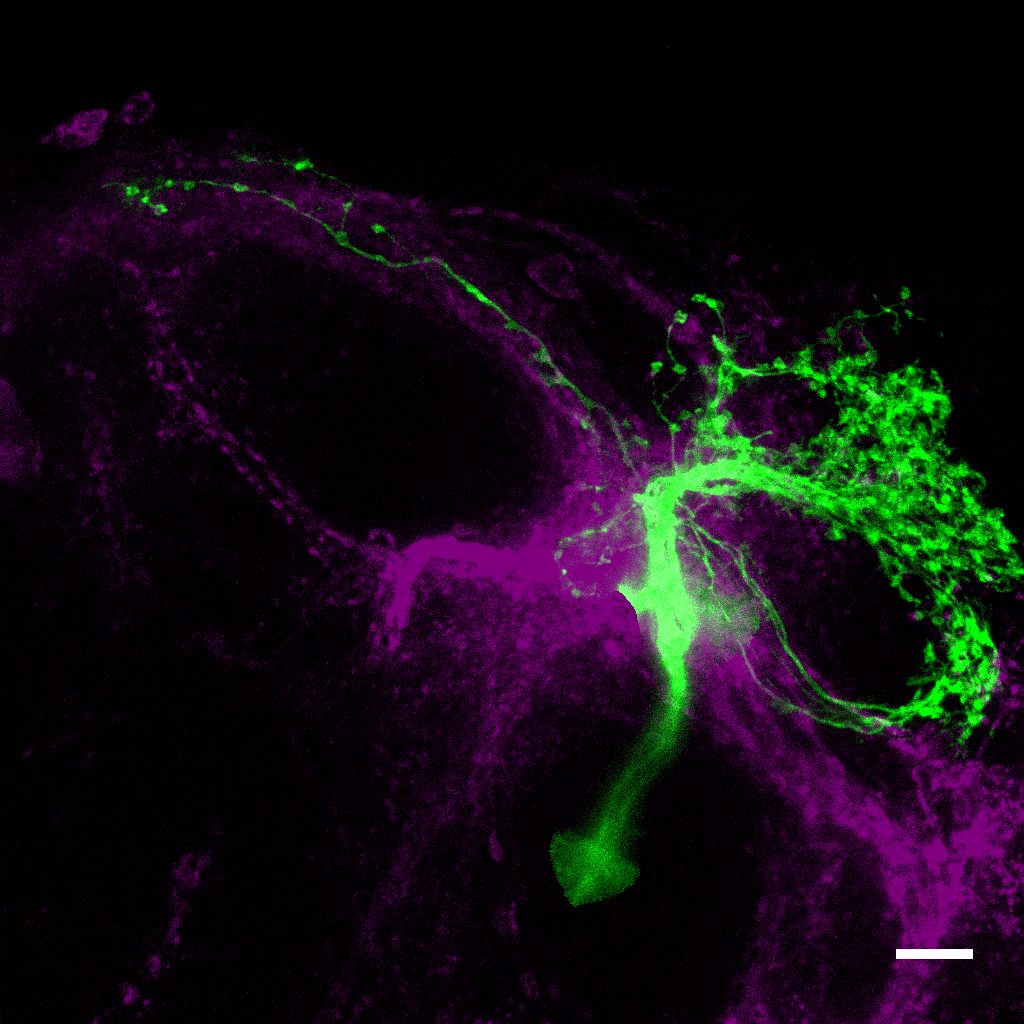
Using FlyMAD, I found a neuronal trigger for courtship arousal. I then found that activating excitatory and inhibitory neurons in concert with one another allowed me to dial the level of courtship arousal up and down.
These findings are unpublished.
Outcome
The instrument was published as Bath, Stowers, Hörmann, Poehlmann, Dickson & Straw (2014), “FlyMAD: rapid thermogenetic control of neuronal activity in freely walking Drosophila”, Nature Methods 11: 756–762. Related circuit work appeared in McKellar et al. (2019), Current Biology 29: 426–434. Presented as invited talks at Cold Spring Harbor (2013) and the Max Planck Department of Circuits, Computation & Models (2014), and as a poster at the Ascona Neural Circuits Meeting (2015).
My contribution
First author on FlyMAD. I led the biological design and the experiments, co-developed the instrument with the engineering team, and carried out the circuit experiments.
Videos
Gallery