Closed-loop projection for collective perception
Can a group detect a signal that its individual members can’t? I built a closed-loop projector system that tracks a whole school of fish and shows it moving visual stimuli in real time, to study how groups perceive and decide.
- Where
- Max Planck Institute of Animal Behavior · Konstanz, Germany
- When
- 2016 – 2020
- Role
- Postdoctoral Researcher (with Iain Couzin)
- Tools
- Real-time tracking, projection, Python, Bayesian inference
The question
Animals in groups interact constantly, and these interactions give rise to collective behaviour that responds to the environment. How much information processing does a group actually do, and how does that depend on the size of the group? Answering this needs precise control over what every animal sees.
The build
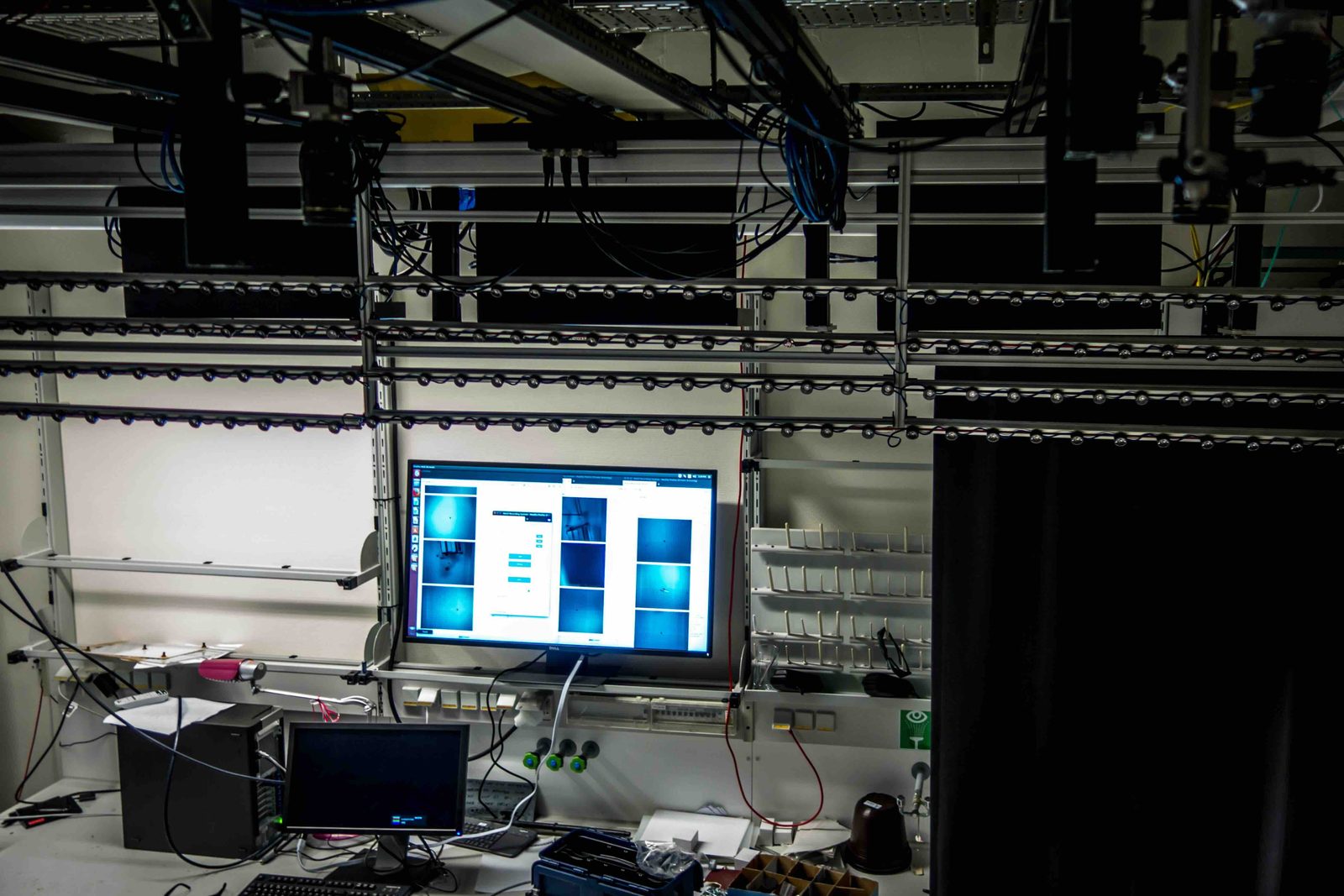
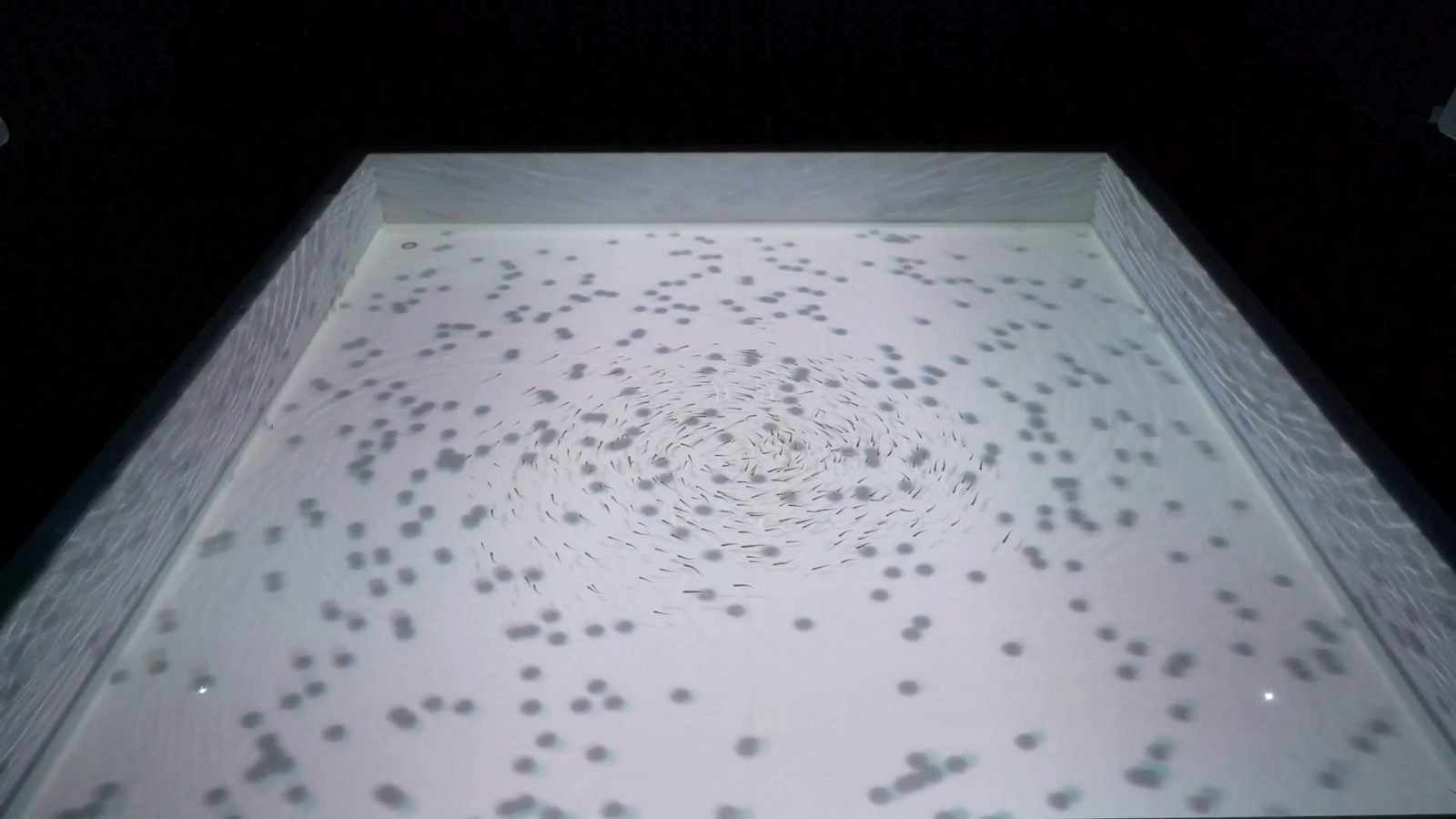
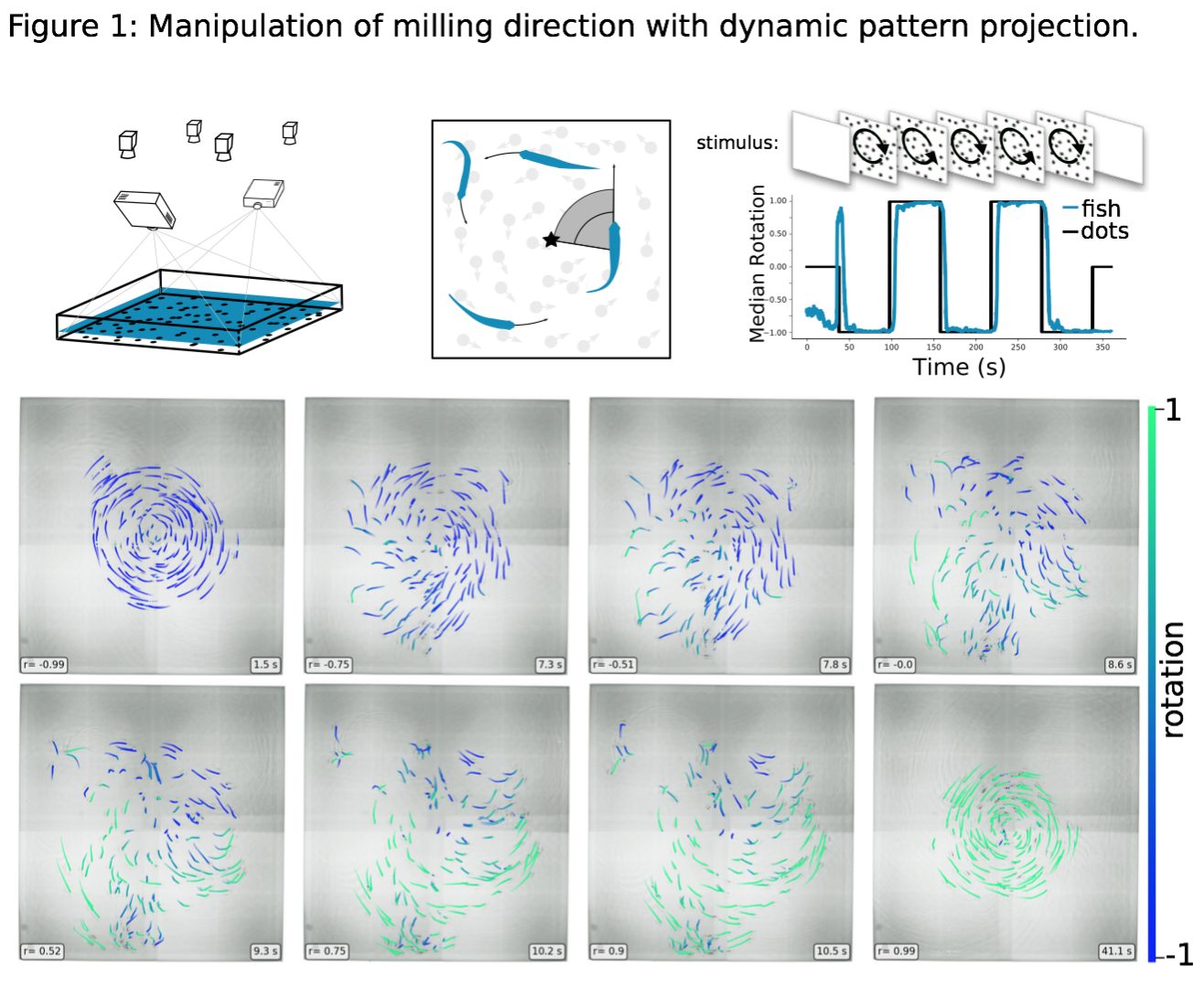
- Designed and built a large experimental facility that projects moving patterns onto the floor of a shallow aquarium
- Tracked the fish in real time and closed the loop, so the stimulus could depend on where the animals were
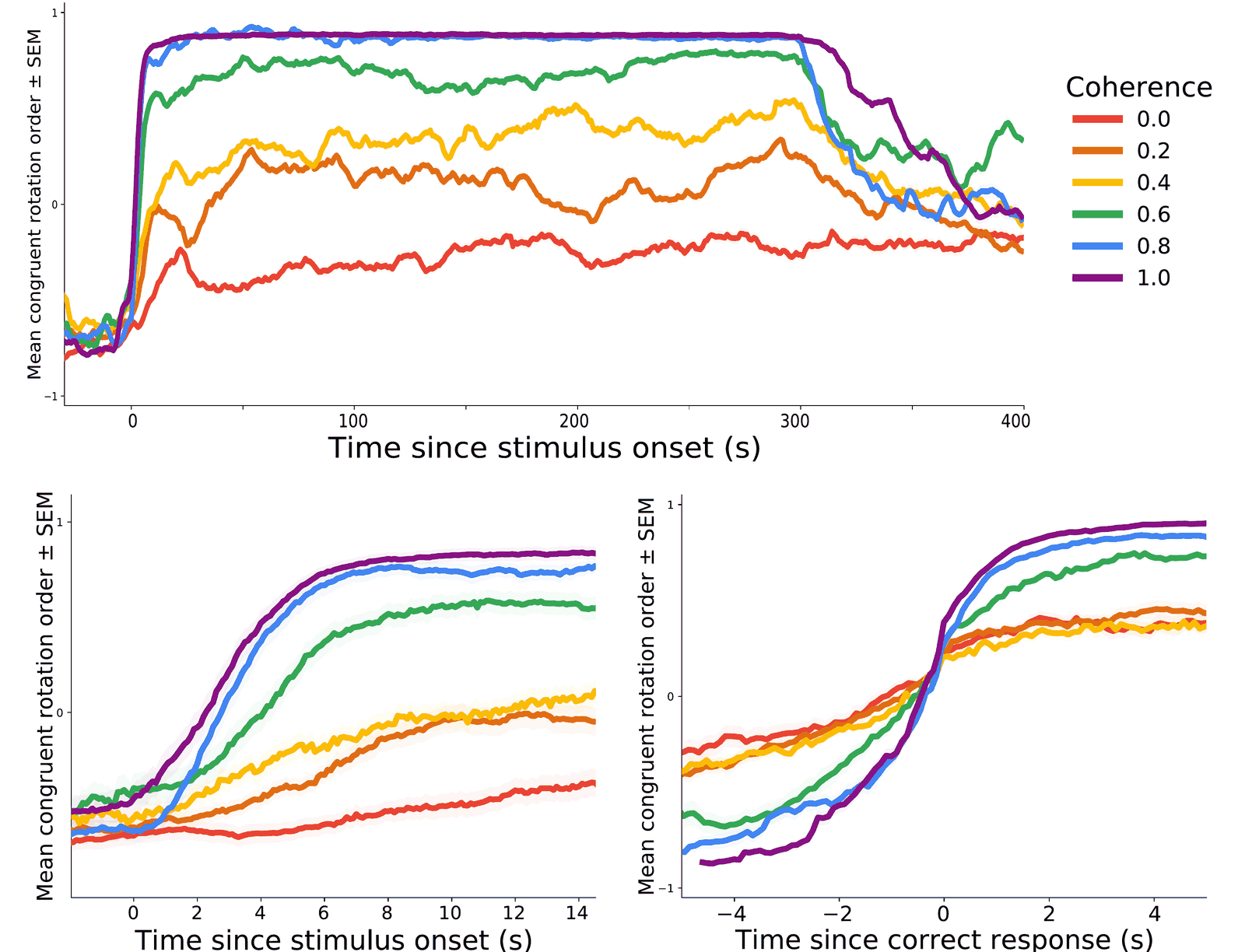
- Adapted a classic neuroscience perception task, the random-dot kinetogram, so whole schools could perform it. The school has to detect coherent motion hidden among random motion
The science
I turned social interactions into causal graphs of collective decision-making. With Bayesian modelling experts, I inferred how group size affects the group’s ability to process information, and designed perturbation experiments with noisy signals to test the models against real data.
Outcome
Manuscript in preparation: Bath, Graving, Walter & Couzin, “Causal role of group size in collective signal detection.” Invited talks at the International Centre for Theoretical Physics (Trieste, 2018), HHMI Janelia (2018) and the ASAB Summer Conference (Konstanz, 2019).
My contribution
I conceived the experiments, designed and built the facility, and ran the study. I also supervised a Master’s student who developed machine-learning algorithms to control fish schools in the arena.